James and the Giant Corn Rotating Header Image

agriculture

Bt Rice in China

Reuters has a story up, based on anonymous sources, that China has just approved a government developed strain of bt rice*. Bt crops express a protein isolated from Bacillus thuringiensis a bacteria used by organic farmers to control insects. The introduction of bt crops (primarily corn and cotton) has lead to substantial reductions in the use of insecticides. China plants more than 100,000 square miles of land with rice each year, so the environmental and economic** impact of being able to reduce insecticide applications would be substantial.

China is also in a unique position when it comes to commercializing any form of genetically engineered rice, as the world’s largest producer of rice, but only a small next exporter*** China stands to benefit from any improvements to rice, and is largely immune to pressure from food importing countries such as the members of the European Union. China has also invested (and continues to invest) billions of dollars in developing their own, publicly-funded, domestic crop research and breeding which has kept their per acre crop yields trending upwards, and now means they’re prepared to make the leap to genetically engineered food crops (they’ve had bt cotton for some time) with home-grown technology, killing any narrative about this being western tech foisted off on the developing world. (more…)

Share

The Domestication of Maize

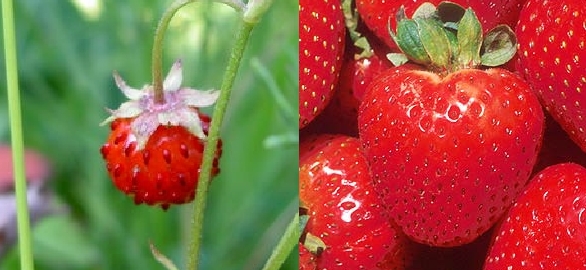
Twenty thousand years ago, not a single crop species existed in its current form. Almost* every bite of food you eat today is the result huge amounts of human artificial selection, both unconsciously and intentionally by farmers and plant breeders. Sometimes the obvious changes are minor, for example between wild and domesticated strawberries:

Wild strawberry (left) and domesticated strawberry (right)

Wild strawberry (left) and domesticated strawberry (right)

Clearly one of the major traits early strawberry growers selected for was bigger fruits. Which makes sense since it takes about the same amount of time an effort to pick a strawberry either way, but if you’re picking the ones on the right you’ll have more pounds of fruit picked at the end of the day.

But even in this case, the similarity in form hides major changes at the genome left. Strawberries went through two whole genome duplications during domestication (looks like it’s more complicated than I made it sound see comments), so each of the cells in the strawberries on the right contain eight copies of each chromosome, while the strawberry on the left contains the more standard two copies of each chromosome.

On the other end of the spectrum is maize. (more…)

Share

It never rains but it pours (more analysis of The Organic Center report)

Just this morning I was talking about how I’d hope to see more analysis of The Organic Center’s report on genetic engineering’s effect on pesticides. Just a little while ago I was able to point to a discussion of problems with some of the numbers behind the report. Here’s more perspective (this time from Steve Savage on sustainablog), which brings up another key point I didn’t consider. Much of the increase in pesticide use attributed to herbicide tolerant crops actually came in 2007-2008, the same year that food prices spiked around the world:

There is an old saying – “the best cure for high food commodity prices is high food commodity prices.”  When grain prices are high, growers respond by planting more acres (=more chemical use) and by applying more crop protection chemicals to the crop they grow so that less of this more valuable yield is lost to pests.  Its really simple, rational economics.  Also, remember that the irritating, but not large, food price increases American consumers saw in 2007/8 corresponded to a huge swing in the percent of the family budget spent on food in poor countries.  There were even food riots and export restrictions.  The fact that American farmers ramped up production was a good thing for poor people and the chemicals were part of that.

Share

Actual Evaluation of the Pesticide Use Report

I published this morning about putting the numbers being reported by the organic center about increased use of pesticides in herbicide tolerant crops into the proper perspective. In the introduction I mentioned:

I’m neither a statistician nor an agronomist, so I’m not qualified to confirm or refute the numbers they put forward. Hopefully we’ll see more detailed analysis on that end from someplace like biofortified or sustainablog.

And here, fresh from the biofortified forums, is a link to a report [pdf again I'm afraid] that goes into details with problems with the actually methodology used in The Organic Center’s report. (h/t to gntis for posting it)

From a quick skim (I’m too excited about the maize genome to be detail oriented):

  • The remaining acres grown with non-BT crops are grown that way for reasons (stricter pesticide regulation, more pest pressure, intentionally being grown as a low input crop, where the farmer accepts lower yields and puts a lot less money into fertilizer, seeds, and herbicides, possibly even acres in transition to organic certification (which requires three years)). They aren’t a random subset of all the acreage on which that crop is grown, and as a result using their herbicide numbers to extrapolate to what the total usage would be in the absence of biotech crops is wildly inaccurate.
  • There actually is a statistic, called the environmental impact quotient, (developed by Cornell!) which takes into account issues like differences in persistence, toxicity, and dispersal between different herbicides!
  • There are other more complete datasets on pesticide usage available (which paint a different picture from the one presented), which the author choose not to take advantage of, preferring to extrapolate from the incomplete data he selected.
Share

Not Genetically Engineered: Grapes

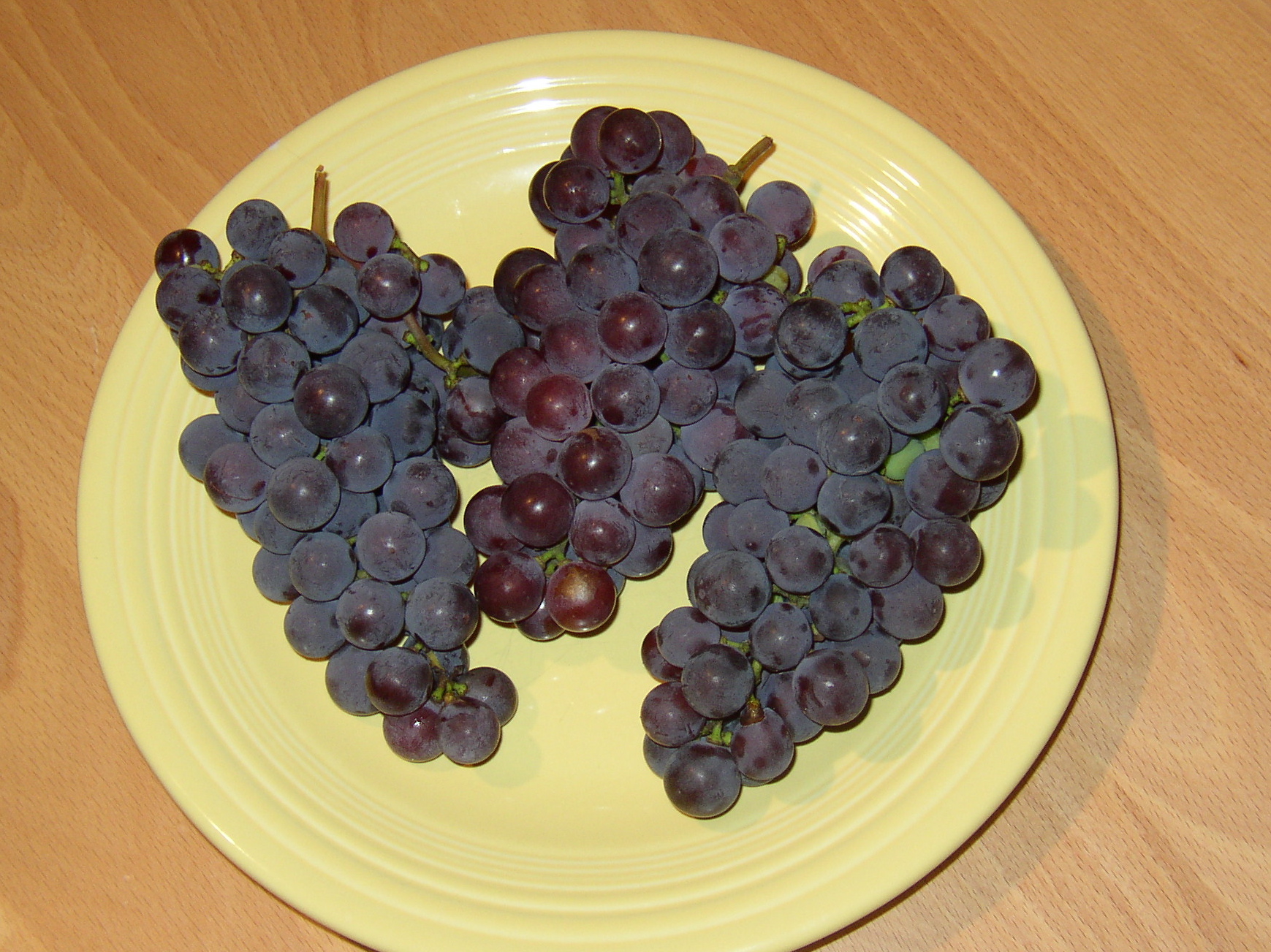
New York Grapes. Concords I believe, though it's been several years so I may be remembering wrong.

New York Grapes. Concords I believe, though it's been several years so I may be remembering wrong.

Scientific Name: Vitis vinifera

Supposed Genetically Engineered Trait: Large size/seedlessness

The Real Story:

Seedless grapes are descended from several different mutations that all result in the developing embryos of grape seeds to abort prematurely*. You can still find the tiny dead remnants of seeds in seedless grapes. Of course being seedless raises a new question: How do plant breeders work with seedless grapes? (more…)

Share

About the herbicide application report that’s floating around

I’m sure everyone who follows the genetic engineering debate has heard about the report from The Organic Center which lays a net increase in pesticide usage at the feet of genetically engineered crops. So I finally found a link to the report itself [warning pdf, also 69 pages]. I’m neither a statistician nor an agronomist (despite my awesome ISU hat which has exactly that slogan), so I’m not qualified to confirm or refute the numbers they put forward. Hopefully we’ll see more detailed analysis on that end from someplace like Biofortified or Sustainablog. I now have some analysis of the methodology of the report itself, tracked down by gntis on the biofortified forums. What I can do is given a bit of the broader context about the context of their numbers and what they don’t mean. This post will be in the following format:

  • The 318 million pounds in context
  • Chemicals are different
  • –Different Toxicity
  • –Different Persistance in the Environment
  • Herbicide resistant weeds
  • One trait vs a technology

318 Million Pounds in Context

Example tweet:

Pesticide use has skyrocketed by 318 million lbs (in last 13 years) with use of #GMO seeds!

Let’s put that number in perspective. (more…)

Share

Biotech Wheat

Nature Biotechnology has an article well worth checking out (if you have journal access anyway) about the story of biotech wheat. No genetically engineered wheat is commercially grown today, nor has it been in the past.  Monsanto came close to releasing an herbicide tolerant variety several years ago, but didn’t because of fear that American farmers would lose valuable markets for our wheat exports. I speculated that genetically engineered wheat runs into more consumer opposition because we eat more wheat in recognizable forms (mostly bread and pasta) than we do crops like corn, soybeans, and canola.

Anyway, two new developments seem to have prompted this article. (more…)

Share

Dr. Gebisa Ejeta on Investing in Agriculture

I mentioned Doctor Gebisa Ejeta before when he won the world food prize for his work developing striga resistant sorghum breeds. This is a man who began life… well his own words can say it better than I can paraphrase:

I was born of illiterate parents with little means and raised in a small village without schools in west-central Ethiopia. An only child, I was nurtured with with lots of love, but on a diet less than adequate even for body maintenance, let alone for growth and intellectual development. … I was rescued by a godsend from the United State of America…

I took that quote from his testimony before the Senate Committee on Foreign relations this past spring. It was a moving call to renew the international investments in agricultural research, and the training of plant scientists around the world, something the United State and the international community as a whole have let slide for the past two decades. The whole testimony is an excellent read (h/t to mary for pointing it out on the biofortified forums). If you have a few minutes, please take the time to read the whole thing here [pdf]. If you don’t, you surely have the time to read this single paragraph: (more…)

Share

Not Genetically Engineered: Watermelon

I know I'm reusing images, but this is just a really gorgeous watermelon

I know I'm reusing images, but this is just a really gorgeous watermelon

Scientific Name: Citrullus lanatus

Purported Genetically Engineered Trait: Lack of seeds

The Reality:

Seedless watermelons grow on triploid (three copies of every chromosome) watermelon plants. Like the banana, triploid watermelons are seedless because it’s impossible to separate three copies of each chromosome into different different reproductive cells. Unlike bananas, seedless watermelons are grown from seed and must be fertilized by fertile (diploid) watermelons to produce fruit.

Where do farmers get seeds for a seedless plant? (more…)

Share

Indian Farmers

Over 60% of India’s workforce still works in the agricultural sector. Most are tenant farmers living in small villages, and a recent survey says a minimum of 40% of them would rather be doing something else rather than farming. At the same time the country is facing a looming crisis with as crop yields haven’t grown much since the green revolution, and population continues to. (more…)

Share