James and the Giant Corn Rotating Header Image

agriculture

Genetically Engineered Crops: Cotton

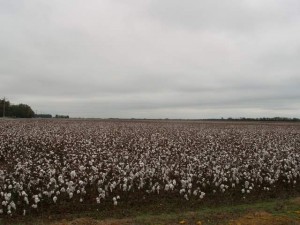
Field of Cotton in South Carolina. Photo: hdport, flickr

Field of Cotton in South Carolina. Photo: hdport, flickr

Scientific Name: Gossypium itscomplicated*

Genetically Engineered Traits: Insect Resistance (bt), Herbicide Resistance

Details of Genetic Engineering:

Cotton has been genetically engineered to resist both glyphosate (by Monsanto) and glufinsate (by Bayer CropScience) under the names Roundup Ready and LibertyLink respectively. As I’ve discussed in previous posts, there are both economic and scientific advantages to having more than one herbicide/herbicide resistance system as it tends to keep prices down, and slows the development of resistant weeds when any resistance they evolve to one herbicide will be useless if the farmer switches to the other for the next growing season.

But the big deal when it comes to genetically engineered cotton is bt cotton that substantially reduces insect damage (and insecticide applications). In the US both Monsanto and Dow AgroSciences sell their own versions of bt cotton using different bt proteins with different specificities. The Chinese government has also developed and deployed their own bt cotton varieties. Bt cotton is the most widely grown** type of genetically engineered plant in the world today, grown in countries like China, India***, and Australia, where other genetically modified crops are not yet approved, for the obvious reason that it’s harder to get people upset about wearing “unnatural” things than eating them.****

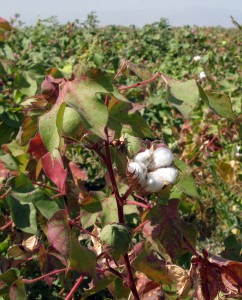
Cotton plant in Turkmenistan. Photo: flydime, flickr

Cotton plant in Turkmenistan. Photo: flydime, flickr

About Cotton: (more…)

Share

Marker Assisted Breeding

Some traits are easy to select for. It’s easy to tell which plants have a gene that turns them purple, or one that turns a single stalk of corn into a, for lack of a better word, corn bush. (links) When I was an undergrad some of the world I did was with a gene that (when it wasn’t knocked out by a transposon) turned corn kernals dark purple. Traits like that one (the R gene) that can be identified just from looking at a seed are the easiest of all.
Other traits are not so easy to select for. How do you pick out which plants in a row carry a gene variant that increases yield by 6%. Or worse yet, yields 6% more under drought conditions, but has no effect otherwise? For improving crops a plant breeder will need to track gene variants for many generations under in all sorts of growing conditions.
The solution, made possible by modern genomics and molecular biology, is to use differences in the genetics code between individuals in the same species to track what what happens to different pieces of DNA from one generation to the next.
Today a plant breeder can take a piece of leaf from every plant in his field, and find out a huge amount about which parts of their genomes they inherited from which parents. So even if it’s not a dry year, he or she can still tell which plants carry the gene variant previously identified as better surviving drought. A breeder can check for dozens or hundreds of of different genes in each plant from that same small piece of leaf.
Some companies are even setting up systems to scrape little pieces off of individual corn kernals and do the same kinds of analysis. Then only the kernals with promising combinations of gene variants are planted, either further study or breeding with other kinds of corn carrying other promising traits identified and mapped by breeders.
The system can also work to discover useful new traits, something called quantitative trait mapping. A bunch of plants that are the mixed descendants of two known breeds are measured for some trait, for this example let’s use flowering time. The same plants are also analyzed using known genetic varations between their two ancestors to see which parts of their genomes come from which of the ancestral breeds. A region of the genome that contains a gene that effects flowering time will show a pattern. More of the plants which flower earliest will have inherited that region from one of their ancestors, and more of the plants which flower later will have inherited that region from the other ancestor. Regions of the genome what don’t contain genes that have an effect on when plants flower will be randomly distributed between the earlier and later flowering plants
Doing some complicated math that I don’t even want to think about can reveal regions on individual chromosomes which contains genes that control flowering time.  Depending on how much they’re able to narrow the region down, breeders will often use the regions they identify (called QTLs: quantitative trait loci) to bread improved crops without ever having to identifiy the exact gene responsible. (And flowering time can be important for breeders, for example when adapting a breed of soybeans grown in Georgia to be grown in North Dakota, a breeder will want to select for soybeans that flower faster because the growing season is shorter farther north.)

Some traits are easy to select for. It’s easy to tell which plants have a gene that turns them purple, or almost any of the mutants seen in the mutants of corn garden at cornell. When I was an undergrad some of the world I did was with a gene that (when it wasn’t knocked out by a transposon) turned corn kernals dark purple. Traits like that one (the R gene) that can be identified just from looking at a seed are the easiest of all.

Other traits are not so easy to select for. How do you pick out which plants in a row carry a gene variant that increases yield by 6%? Or worse yet, yields 6% more under drought conditions, but has no effect otherwise? For improving crops a plant breeder will need to track gene variants for many generations under in all sorts of growing conditions. (more…)
Share

Genetically Engineered Crops: Rice

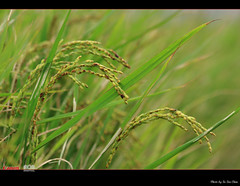
IMG_4625_nEO_IMG

Rice photo: flickr,毛利人

Scientific name: Orzya sativa

Genetically Engineered Traits: Herbicide tolerance, insect resistance (bt), increased vitamin A content

Details of Genetic Engineering:

Rice genetically engineered to be resistant to glufosinate (developed by Bayer CropScience) has been approved (deregulated) in the US but is not yet for sale commercially as the company attempts to get approval in countries which import rice from the US as well.

As far as I know, no company in the US has produced bt rice, which has less to do with consumer fears than with the small amount of rice production in the US rather than consumer rejection, but that’s just a guess. The Chinese government has developed breeds of bt rice, but doesn’t grow them commercially because of the risk to their export markets, which is primarily to countries that reject genetic engineering (although Chinese rice exports are declining drastically as more and more of their production is needed to feed their own people).

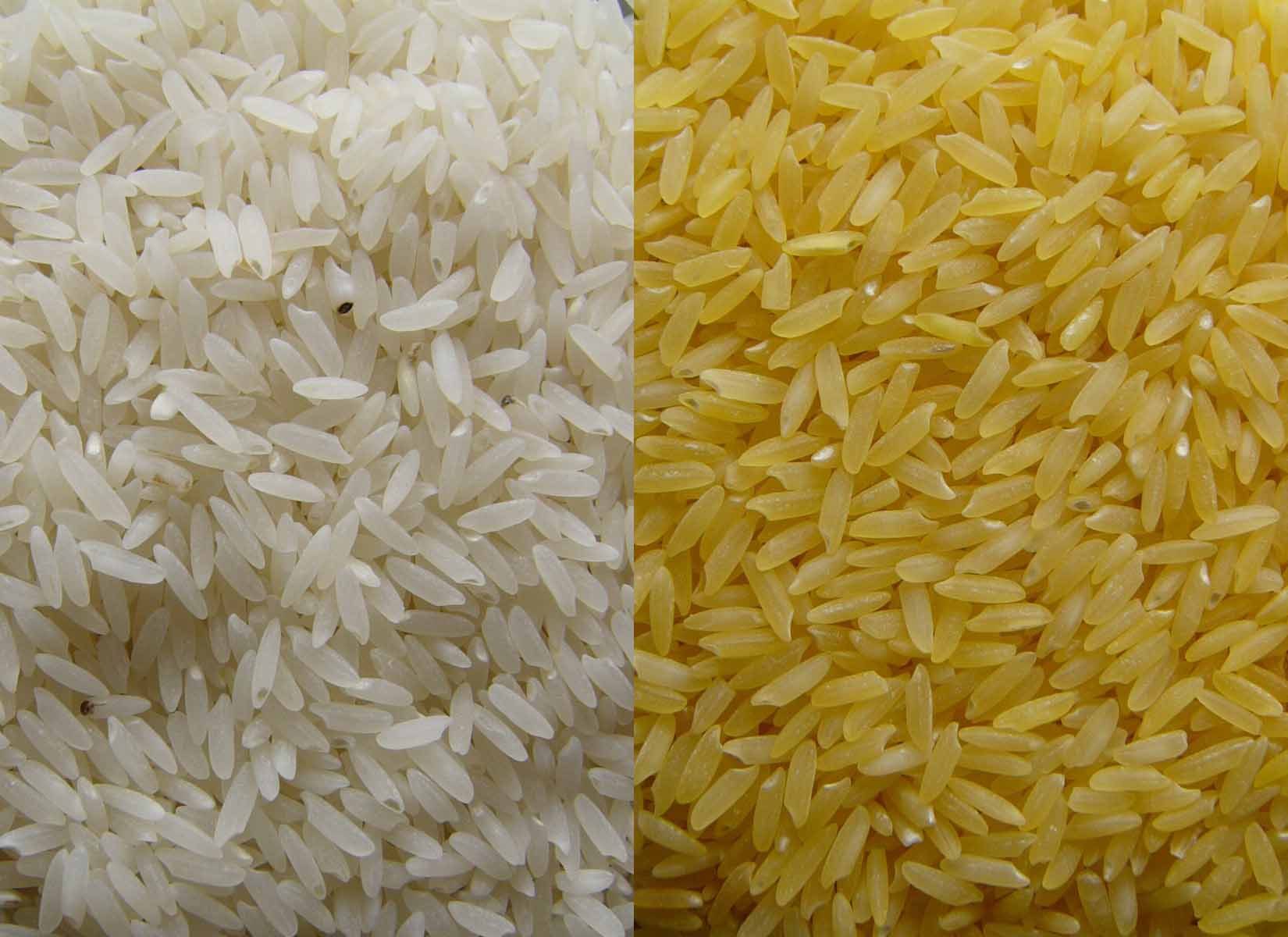
White and Golden Rice Respectively

White and Golden Rice Respectively

Golden rice, which has betacarotene, which human bodies need to make vitamin A, was developed by in Swizerland in the 1990s. Almost all plants produce carotenoids like betacarotene in their leaves as part of the biological machinery that makes photosynthesis possible. Breeders can sometimes identify and propogate natural mutations which lead to the expression of carotenoids in other parts of the plant, two key examples are orange carrots* and orange cauliflower. Vitamin A deficiency is a major issue** in many countries were rice is the primary crop, so breeders have searched for decades for natural mutations at would create orange rice, without success.*** The initial breed of golden rice which used two genes, one from daffodile to promote the expression of carotenoids in the grains of rice was attacked as requiring people to eat more than a dozen bowls of rice a day to get their daily recommended vitamin A intake, new versions that replaced the gene taken from daffodil with a version of the same gene taken from corn have more than twenty times as much beta carotene. Golden rice is also not currently grown commercially as it, like ringspot resistant papaya, doesn’t have a powerful for-profit corporation to shepherd it through the complex approval processes of various nations.

About Rice:
(more…)

Share

Greenpeace offers marker assisted breeding

Greenpeace on Friday called on the International Rice Research Institute to abandon its genetic engineering program as the environmental activist group offers marker assisted breeding as a safe alternative to bioengineering.

Source.

Dear Greenpeace,

I would like to call upon you to abandon your campaign against genetic engineering and offer up an alternative priority your organization could focus on to the greater benefit of the world we all share: Fighting man-made global warming.

-James

Now you could argue greenpeace already is opposed to global warming. And you’d be right. They are. I guess my offering it to them looks pretty stupid doesn’t it?

The same could be said of greenpeace offering marker assisted selection to the plant breeding community that pioneered the technique and is taking full advantage of it, and has been for years in both the private and public sectors. Case in point: (more…)

Share

Genetically Engineered Crops: Sugar Beet

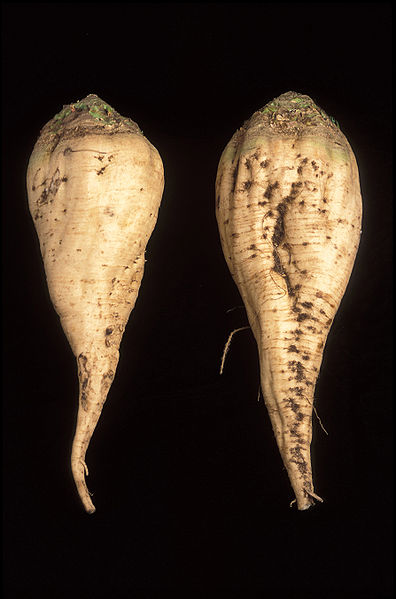
Two sugar beets. From the USDA via wikipedia. (USDA you are awesome)

Two sugar beets. From the USDA via wikipedia. (USDA you continue to be awesome)

Scientific Name: Beta vulgaris*

Genetically Engineered Trait: Herbicide resistance.

Details of Genetic Engineering:

Sugar beets tolerant of the herbicide glyphosate (created by Monsanto) were de-regulated by the USDA in 2005**.  The beets were first grown commercially in 2008. Before the first seeds were even in the ground, the USDA was being sued in California for approving their cultivation. This fall (2009), a federal judge named Jeffery White ruled that the study of the environmental impacts of glyphosate tolerant beets (part of the data the USDA considered in its decision to deregulate the beets) should have considered the economic impacts of the herbicide tolerant beets on organic farmers. Since the ruling came at the end of the growing season,*** there was no time to breed new conventional seed to plant next spring. There may be enough seed next year, but if so it’ll be a stretch.

I’m keeping sugar beets on the list of genetically engineered crops, because there’s a still chance the plants will be grown next year. The judge still hasn’t decided if his own ruling should result in a ban on growing the beets. That’s all the detail I have room for here, but if you’re interested in the court case and the science behind it, I’d recommend checking out Anastasia’s excellent in depth follow up to the judge’s ruling.

About Sugar Beets: (more…)

Share

Hawaiian Pineapples and the Seed Industry

Pineapple. Wish I'd thought to check for a country of origin...

Pineapple. Wish I'd thought to check for a country of origin...

Since today seems to have a tropical theme, here’s another post about Hawaii:

The corn breeding industry is expanding in Hawaii*. The pineapple industry is contracting. People seem to be blaming the second on the first, and are passing this article around. My reading of the article, and some other statistics I looked, don’t seem to agree with the story line (evil GMO seed companies driving out the pineapple industry) that people seem to be suggesting.

Yes, Monsanto did buy out one of Hawaii’s three remaining large pineapple growers several years ago (as of 2007 there were also 49 small pineapple producers growing pineapples on 1-15 acres and a single medium sized grower with between 100-250 acres), but Maui Land & Pineapple Co., the company this article talks about, isn’t selling out to a seed company, they’re switching to the production of other crops instead of pineapples. One company sells its land and shuts down, another stays in the farming business but gives up on pineapples and announced plans to grow a more diverse range of crops. To me, that suggests it is becoming harder and harder to make a profit growing pineapples in Hawaii. (more…)

Share

Genetically Engineered Crops: Papaya

Photo Reeding, Flickr (Click for photo stream)

Photo Reeding, Flickr (Click for photo stream)

Scientific Name: Carica papaya

Genetically Engineered Trait: Resistance to the papaya ringspot virus

Details of Genetic Engineering:

In the 1990s papaya ringspot virus was in the process of wiping out the Hawaiian papaya industry, then the second largest fruit industry in Hawaii. Conventional approaches such as selective breeding for resistant papayas or attempting to grow trees in isolation had failed. The virus is transmitted by small sap-sucking insects such as aphids. Infected papaya trees can be recognized by the discolored rings on their fruit (that the virus gets its name from) yellow leaves, and most importantly from a papaya farmer’s perpsective a 60-100%* loss of fruit production. (more…)

Share

bt: The Bacteria and the Protein

I figured if I am going to do a review of genetically engineered crops, I needed to address the other major traits besides resistance to herbicides presently on the market. This one addresses a family of proteins found in the bacteria Bacillus thuringiensis that can kill insects.

Anyone who reads about the public policy debates swirreling around genetically engineered crops will be familar with the two letter abbreviation ‘bt’ as in bt corn, bt cotton, bt ginseng (the last is fictional). What always surprises me is that some people STOP reading before they come across an explanation of what bt stands for. Just typing bt into google won’t bring up a relevant result until the 30th hit (two letters just isn’t very unique). I have talked with people who are convinced bt stands for everything from biologically treated to BioToxin. It doesn’t.

Golden Eyed Lacewing Adult. It's not much use, but the larva vicious predators of certain plant pests. (Photo public domain courtesy of USDA. You guys are awesome!)

Golden Eyed Lacewing Adult. It's not much use, but the larva vicious predators of certain plant pests. (Photo public domain courtesy of USDA. You guys are awesome!)

The name actually comes from a species of bacteria called Bacillus thuringiensis. Different substrains of the species carry different members of a family of genes that code for Cry proteins (and separately can also carry genes that code for Cyt proteins*), which can kill insects. Finding chemical or biological means to kill insects isn’t that hard. What makes the Cry proteins noteworthy is how selective they are in their killing. A given Cry protein is dangerous to only a small subset of insect species. And that’s important, because, for every** western corn rootworm, european corn borer, or earworm there are also benign or even beneficial insects in and around fields like lacewings, trichogramma wasps, or those rootworm eating nematodes I talked about a couple of days ago, which aren’t insects, but also harmed by insecticides. (Agro-ecology is beyond my field of expertise, had to call up my tipster from the previous post to get this list) When a crop is genetically engineered to produce one of the dozens of Cry proteins discovered in Bacillus thuringiensis, it replaces or reduces the spraying of insecticides to control insect pests, with positive effects on insect biodiversity. (more…)

Share

Genetically Engineered Crops: Soybean

Soybean field. Photo: Big Grey Mare, Flickr (click photo to view photostream)

Soybean field. Photo: Big Grey Mare, Flickr (click photo to view photostream)

Scientific Name: Glycine max

Genetically Engineered Traits: Herbicide Resistance

Details of Genetic Engineering:

The genetic engineering of soybeans is pretty similar to that of Canola. Roundup Ready soybeans (produced by Monsanto) have been on the market for some time. The soybeans, which allowed farmers to spray an herbicide that kills all the plants in the field besides the soybeans themselves, have been a huge hit with market shares >90%. The benefit here is that being able to use herbicide resistant soybeans has been linked to increased use of no-till farming.* Bayer CropScience recently received regulatory approval for LibertyLink soybeans, their own herbicide + resistance system. Having another system is good for two reasons:

  1. Competition brings down prices for farmers
  2. Being able to rotate between two different herbicides prolongs the usefulness of both. Even if weeds develop some resistance to glyphosate (the active ingredient Roundup Ready crops are resistant to) the weeds are killed next year when the farmer sprays Glufosinate (the active ingredient that Liberty Link crops are resistant to).

About Soybeans: (more…)

Share

Genetically Engineered Crops: Canola

Field of Canola in Bloom. Photo: Joe Shlabotnik, flickr (click photo to view Joe's photostream)

Field of Canola in Bloom. Photo: Joe Shlabotnik, flickr (click photo to view Joe's photostream)

Scientific name: Brassica napus

Genetically Engineered Traits: Herbicide Resistance.

Details of Genetic Engineering:

Two companies have produced canola that is resistant to different herbicides.
Monsanto sells canola (Roundup Ready canola) that is resistant to glyphosate, an herbicide monsanto sells under the brand name Roundup and lots of other companies sell under lots of other brand names since the herbicide itself recently came off patent (the resistance trait is still under patent.)
Bayer sells canola (Liberty Link canola) that resists the completely different, if similar sounding herbicide, glufosinate. Glufosinate is sold under a number of brand names (including, you guessed it, Liberty), but I wasn’t able to figure out whether or not it is still under patent.
About Canola:
Derived from the name “Canadian Oil” canola is an oilseed plant also known as rapeseed. The name change came in the 1970s when conventional breeding (this was approx. two decades before the first genetically engineered plants hit the market) created plants with healthier oil and without the bitter taste , and presumably someone to majored in advertising suggested that selling “Rape Oil” would be a good way to go bankrupt.

Two companies have produced canola that is resistant to different herbicides.

Monsanto sells canola (Roundup Ready canola) that is resistant to glyphosate, an herbicide Monsanto sells under the brand name Roundup and lots of other companies sell under lots of other brand names since the herbicide itself recently came off patent (the resistance trait is still under patent.)

Bayer sells canola (Liberty Link canola) that resists the completely different, if similar sounding herbicide, glufosinate. Glufosinate is sold under a number of brand names (including, you guessed it, Liberty), but I wasn’t able to figure out whether or not it is still under patent.

About Canola:

Derived from the name “Canadian Oil” canola is breed of the oilseed crop rapeseed. The name change came in the 1970s when conventional breeding (this was approx. two decades before the first genetically engineered plants hit the market) created plants with healthier oil and without the bitter taste people associated with rapeseed oil, and presumably someone to majored in advertising suggested that selling “Rape Oil” would be a good way to go bankrupt.

Close up of Canola Flowers. Photo: Pollobarca2, flickr (click photo to see pollobarca2's photostream)

Close up of Canola Flowers. Photo: Pollobarca2, flickr (click photo to see pollobarca2's photostream)

Rapeseed (the USDA doesn’t break out separate statistics for Canola) was the third biggest source of vegetable oils around the world in 2008-2009 at 20.5 million metric tons, coming in behind only soybeans and oil palms.

Canola is the main oil I use in my own cooking. Canola is apparently one of the healthier sources of vegetable oils, but the two things I most appreciate about it are the high smoke point (it’s harder to burn the oil itself*), and low cost. Last time I checked I was able to find a 48 oz bottle of canola oil for 2.99 which was better than local prices for peanut or corn oil. (Olive oil of course comes in much smaller containers that cost $10 or more, not at all suitable for graduate students.)

*Good for someone who is both as indifferent a cook, and as easily distracted as I am.

Share